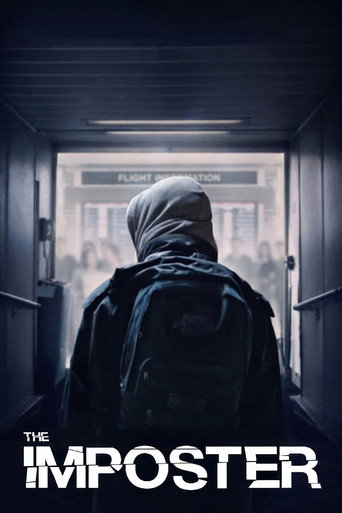

Initially, I watched this thinking it could only happen in the USA. A woman who had never left her country and who genuinely seemed quite impressed that they had Coca Cola in Madrid was not going to prove so very hard to convince of something she wanted to be convinced of anyway! That's because her family had received news that her long-disappeared thirteen year old brother had been located thousands of miles away in Spain and that he wanted to come home. He told the local authorities that he had been the victim of sexual abuse at the hands of high ranking military figures and so before he knows it, he has been verified by the consulate and has been reunited with his family. Snag? Well it turns out that Nicholas Barclay isn't Nicholas Barclay. He's a serial impersonator-cum-manipulator called Frédéric Bourdin and he is a major contributor in this really quite fascinating documentary. We also hear from sister Carey Gibson; his mother Beverly Dollarhide and from an array of officials who were well and truly duped by this cunning man whom, it has to be said, bore precisely no resemblance to the photos of the blonde and blue-eyed lad who had ostensibly been kidnapped. What makes this all the more interesting is the investigation into just what might have happened to Nicholas. His family are not your archetypal Sunday-go-to-church types and as private investigator Charlie Parker (played by an actor) realises almost immediately that Bourdin isn't the man he's claiming to be, the emphasis starts to shift onto something more akin to a conspiracy theory to end them all. Now the first question you scream at the screen has to be about scientific identification. If daytime television can offer polygram/blood and even DNA tests, then why on earth didn't the authorities in Spain or the USA just simply use those tools to identify him? Even more unfathomably, why didn't the mother ask for the test? Had they their own agenda or were they just so desperate to believe? What is curious about the construction of this film is that those contributing, save for the unnervingly honest Bourdin himself, are never asked these questions and the more that emerged from their mouths the less made sense and the more desperate things became. There is so little passion or emotion from them. Is that because they are just so phased by the surrealness of the whole experience or do they actually know where their lad is? The second half is certainly much more intriguing and there is something really quite compelling about everyone's testimony that this film leaves hanging uncomfortably and factually incomplete.
0 comments
No comments yet. Be the first to weigh in.